Dancing with Algorithms: A Creative Path into Computer Science with Céilí
A kinaesthetic unplugged approach that gets learners problem-solving, moving, and working together
What do algorithms and dance have in common? More than you'd think. Both rely on clear instructions, sequences, and patterns.
Kate Sutherland spends her time teaching across two worlds, a dance studio and classrooms, as an outreach ed-tech facilitator with Digital Future Aotearoa.
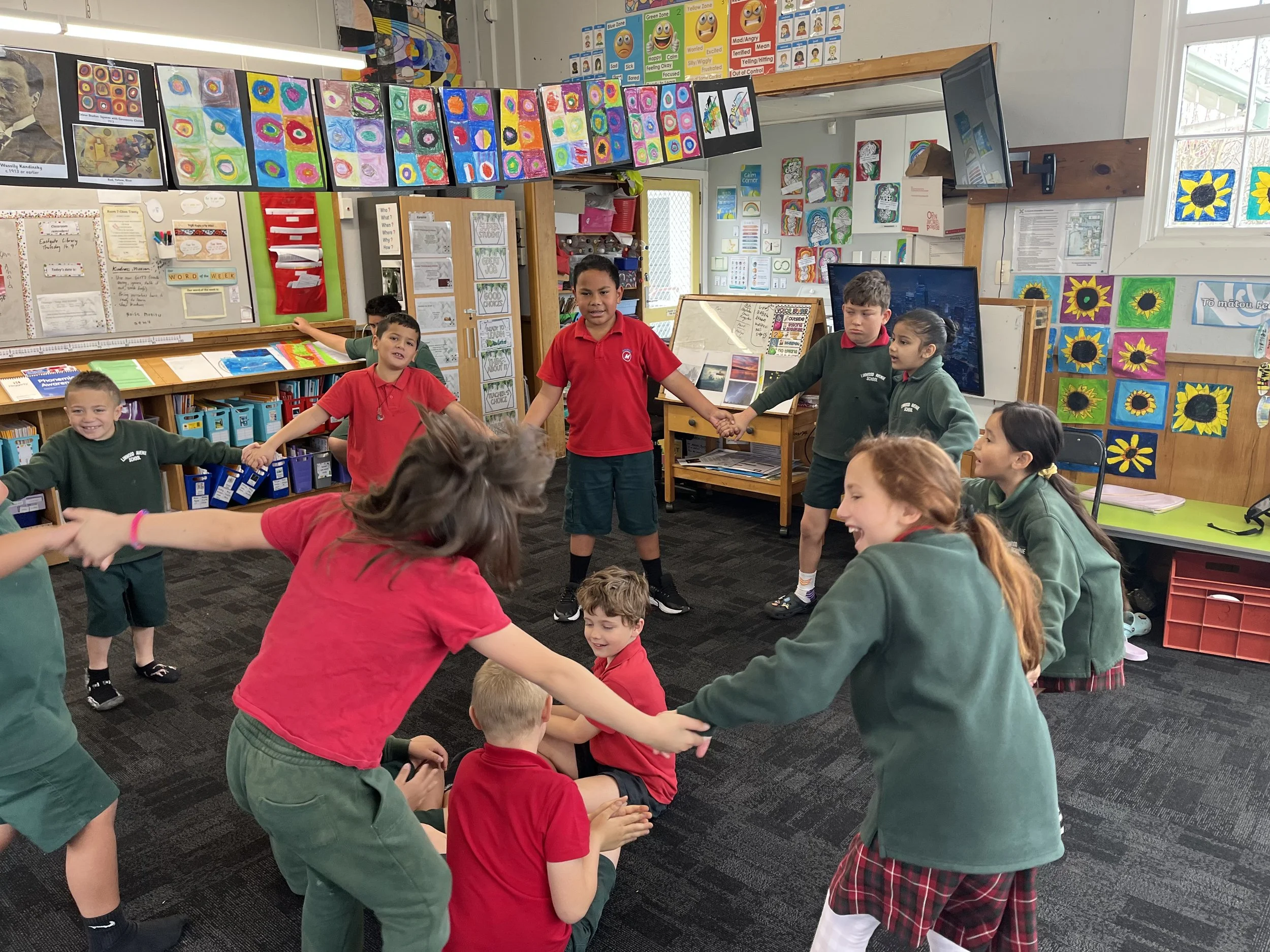
Computer science, she'll tell you, doesn't have to start with computers.
Over the summer, while Kate was revising multiple step sequences in Ar Rincí Céilí, the realisation clicked that céilí is really just a series of algorithms.
Advance…
Retire…
Turn right…
Circle the set…
Change places…
The universal book of traditional céilí, Ar Rincí Céilí, is a set of step-by-step instructions that dancers follow in sequence much like a computer running a program.
Inspired by the connection, Kate began exploring how this idea might work in classrooms, piloting activities and shaping what would become a new Digital Pīkau resource.
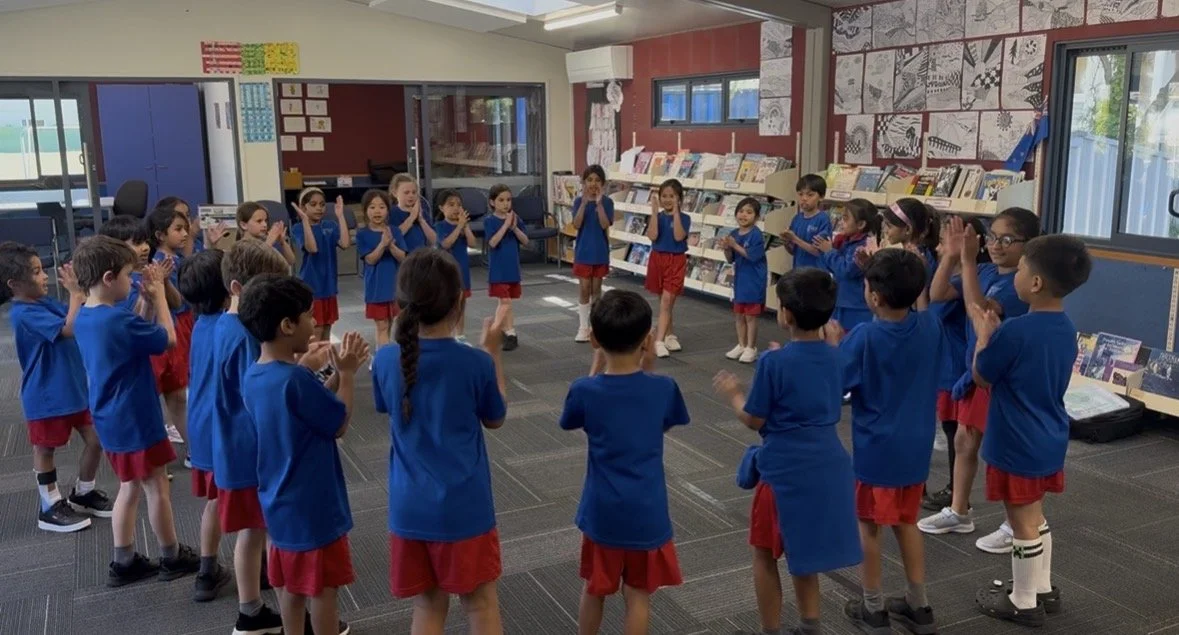
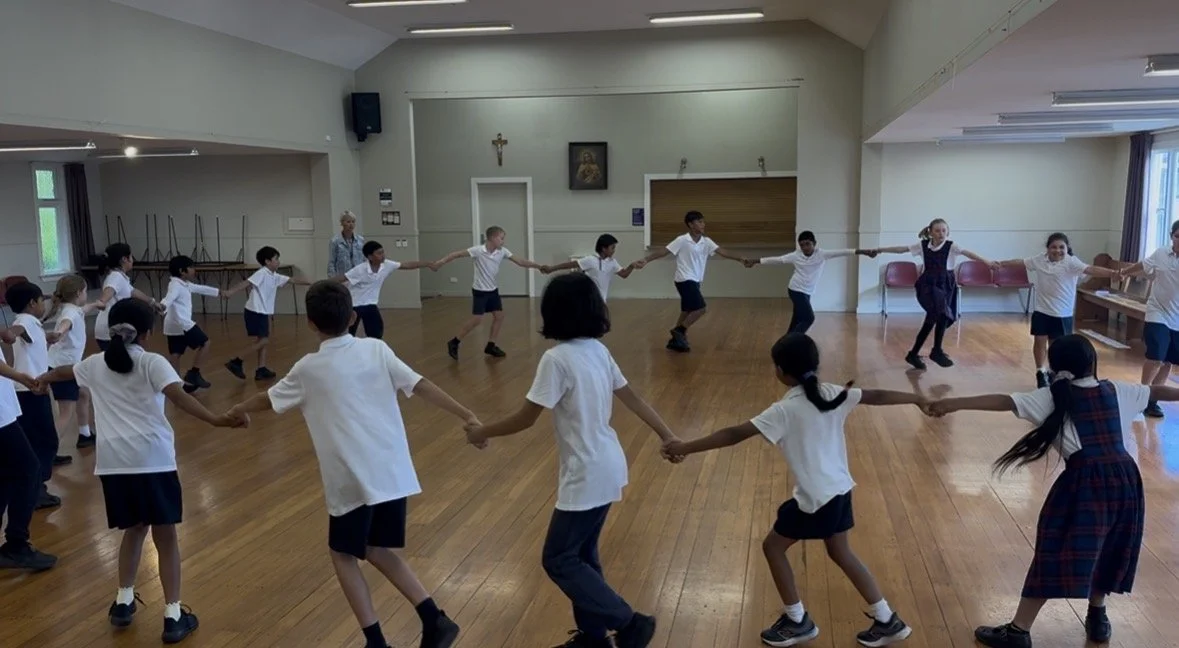
Teachers and learners at Sacred Heart and St Mary’s in Christchurch have this term, been on a journey with Kate connecting and interweaving dance and computer science together.
Learning to code algorithms through céilí dance has proven to be a joyful and accessible way to explore computer science. It’s unplugged, human, hands-on, and a whole lot of fun.
Footwork and Groundwork
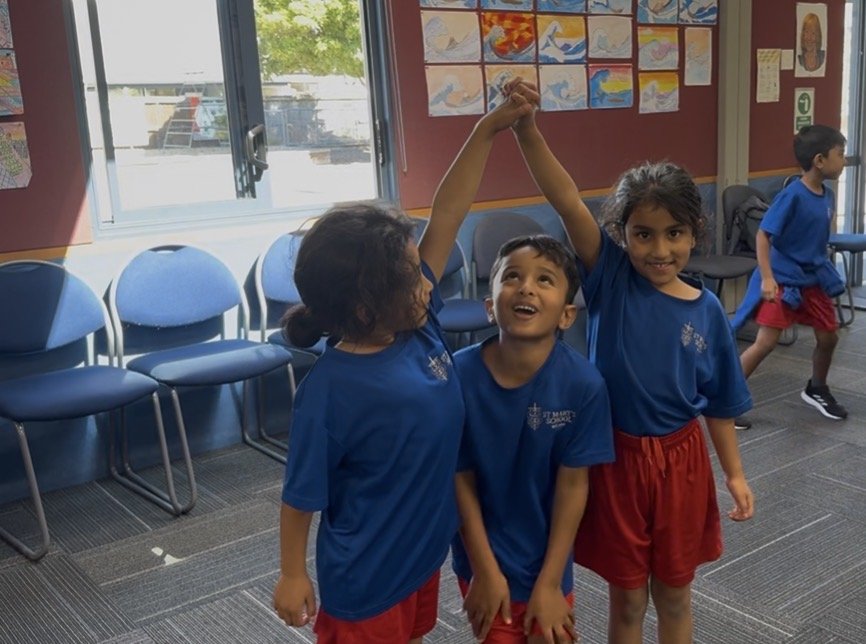
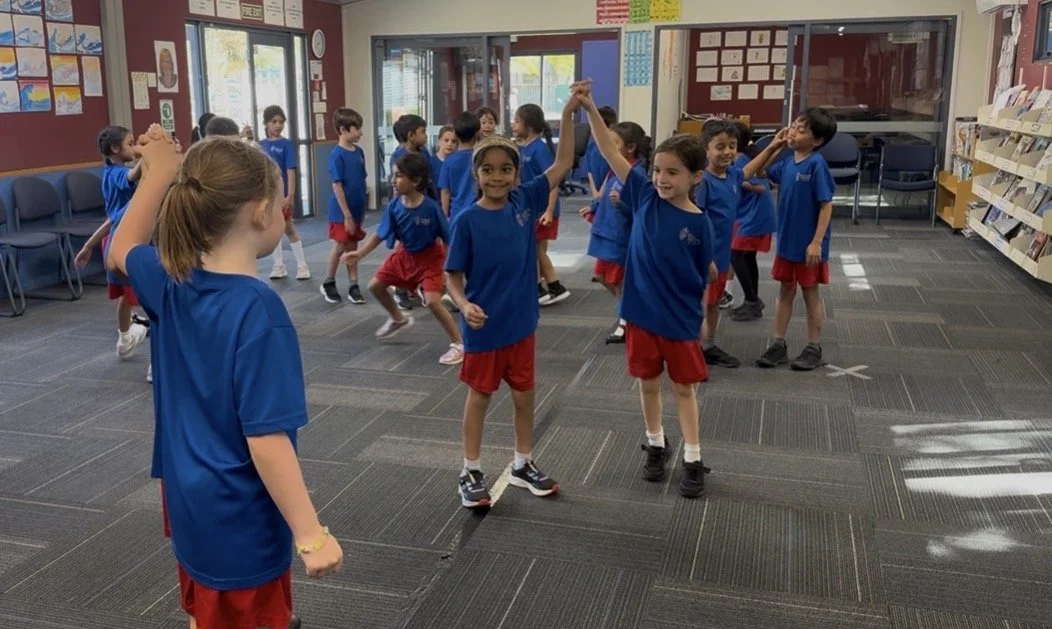
The pilot began with a simple goal: supporting ākonga to explore computational thinking while remaining completely unplugged from screens and devices.
Kate broke down céilí movements into basic commands, translating céilí dance into code. To ease everyone in, she put a playful spin on the familiar game Musical Statues. Ākonga skipped freely while the music played, then when it stopped, a coded instruction told them exactly how to freeze:
Takitahi! (Stand solo)
Takirua! (Form pairs)
Takitoru! (Form groups of three)
Takiwhā! (Form groups of four)
This playful game not only introduced the basics of céilí but also laid the groundwork for understanding code. It guided ākonga to follow precise instructions, notice patterns, and correct mistakes within each energetic round.
With teamwork, a ton of laughter, and without any techy jargon or even glancing at a screen everyone was already starting to mirror the logic and precision of thinking like a computer.
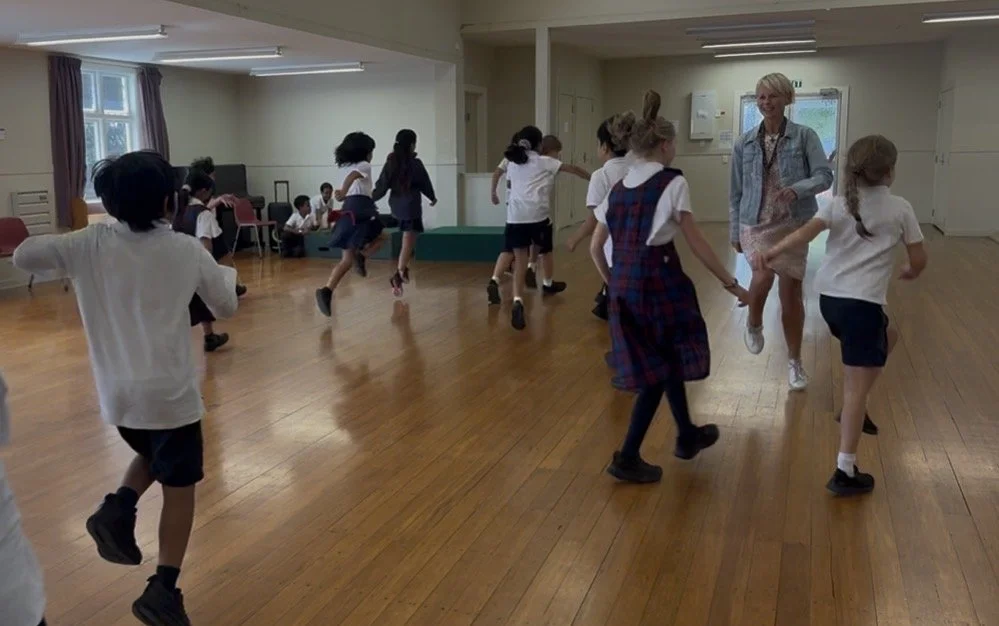
Taking It to the Dance Floor
With everyone warmed up and able to follow basic instructions, the next challenge was to learn the sequence of a simple Bonfire Céilí. This was done collaboratively as one large group.
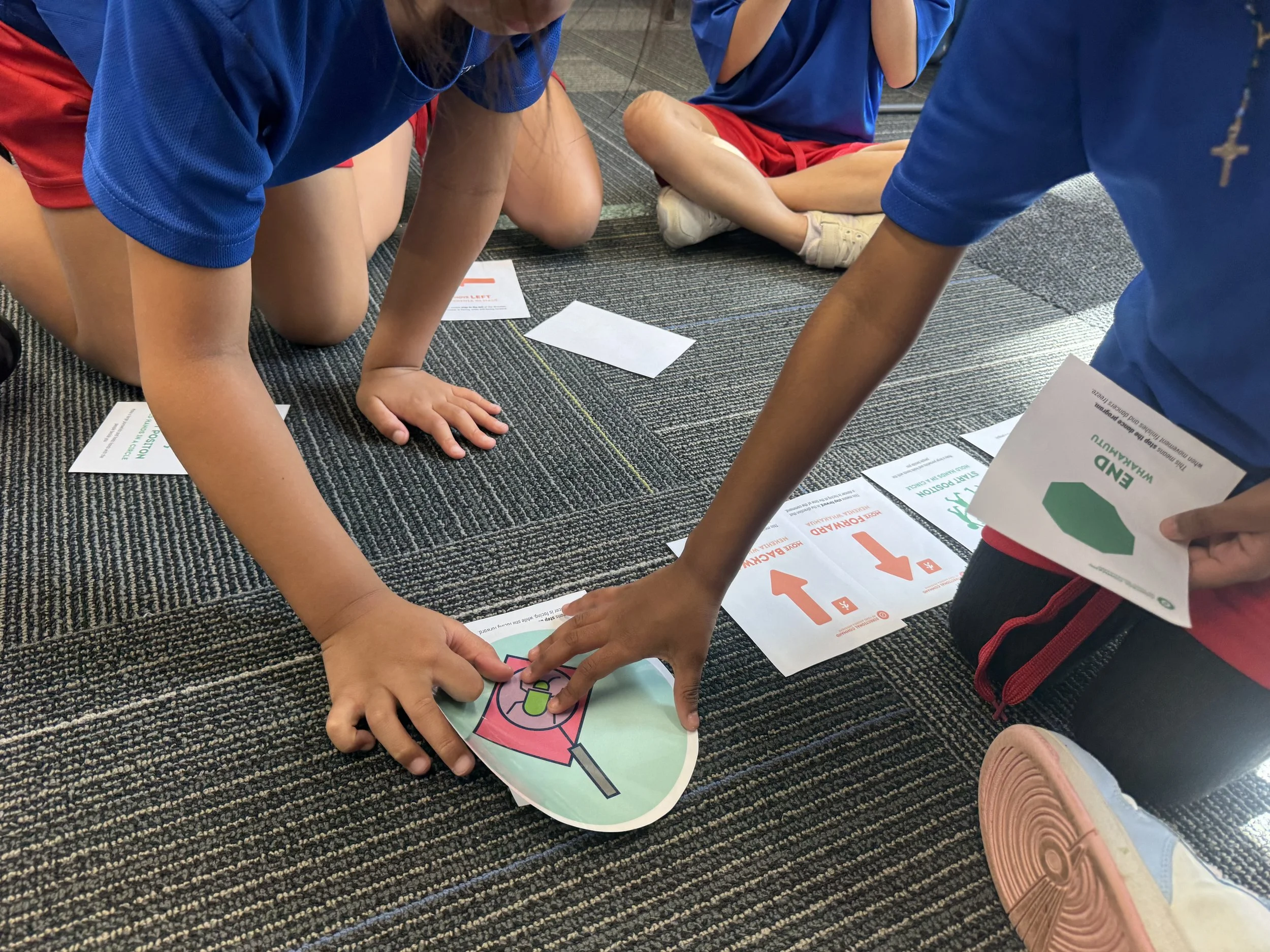
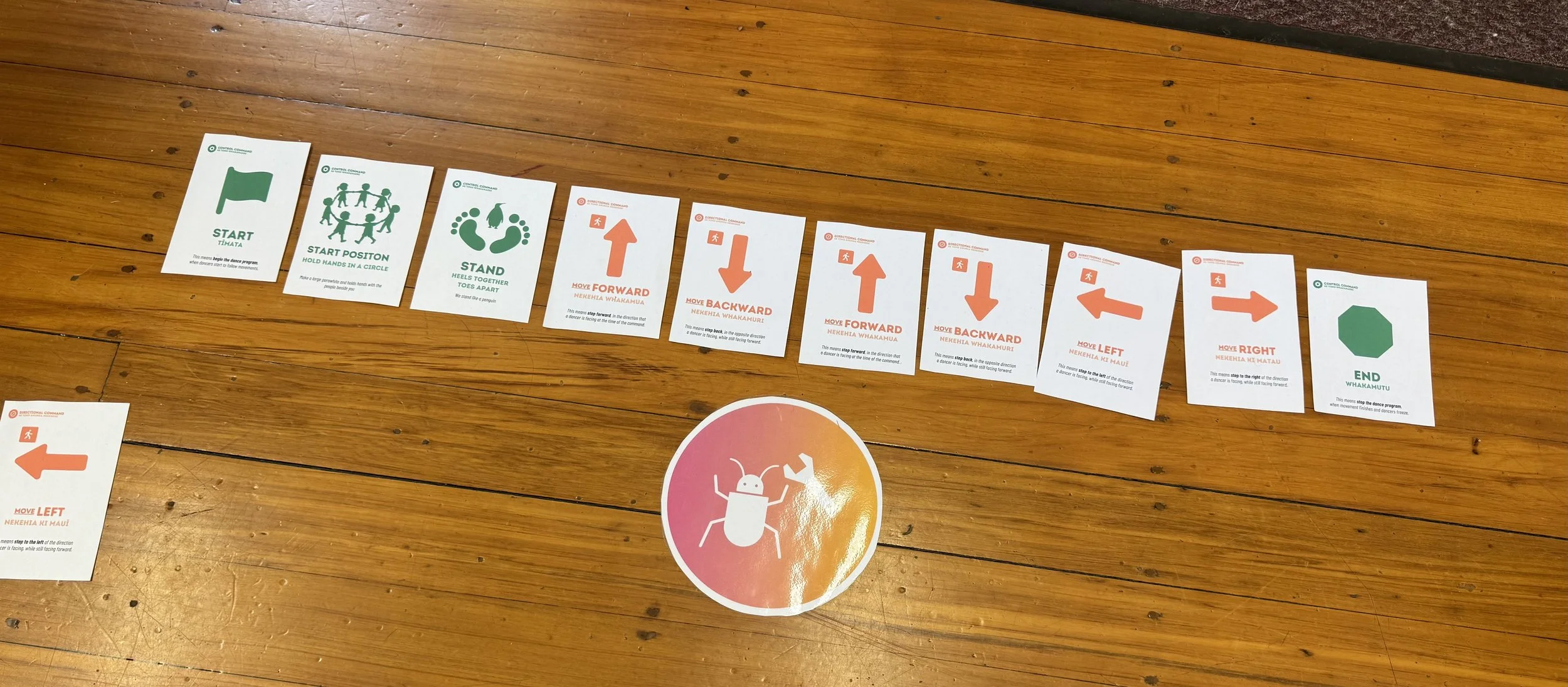
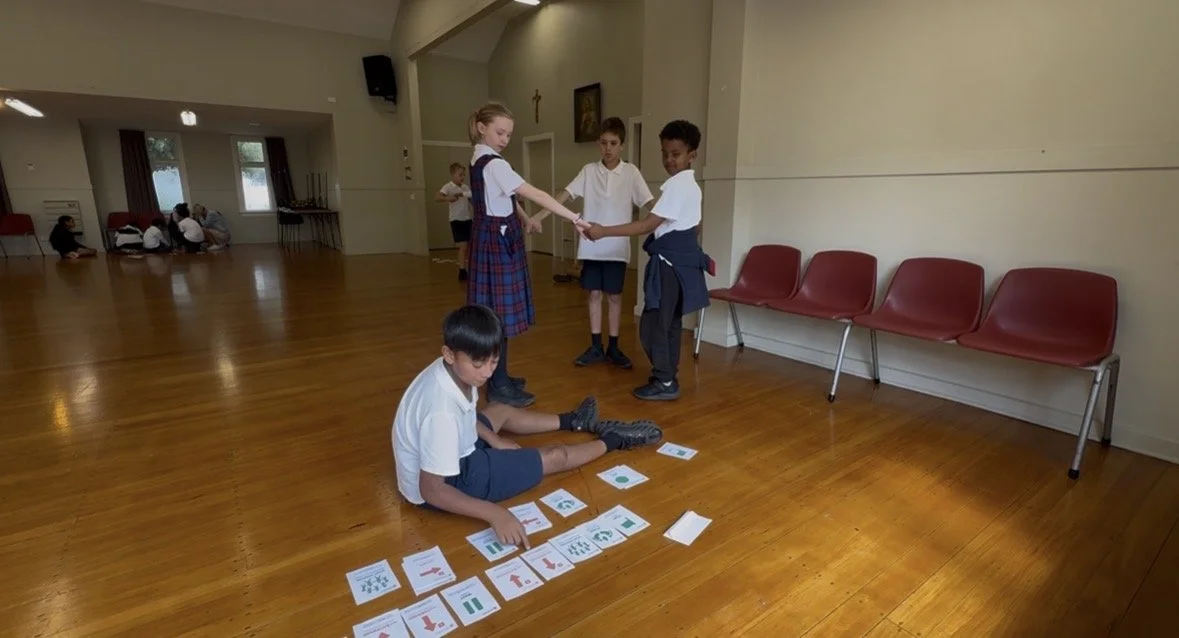
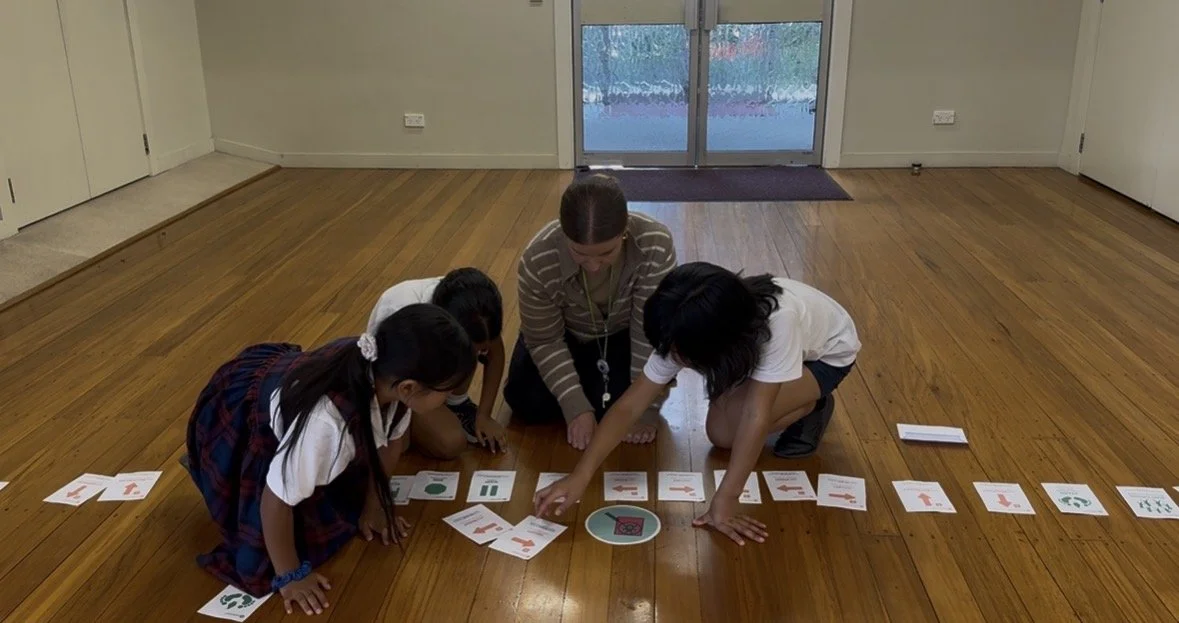
Once the sequence of the céilí had been practised, it was time to split into smaller teams. Using the printable code cards representing each movement, teams built their own sequence ordering instructions to write the program for the Bonfire Céilí.
Their instructions quickly became algorithms.
Move forward for x4 counts…
Move backwards for x4 counts…
Turn left…
Move left for x8 counts around the circle…
Stamp and clap…
There were a variety of roles emerging, with tamariki stepping up as team leaders, problem solvers, programmers, testers, and creators.
Movement, Mistakes, and Debugging
Once the algorithms were lined up, it was time to test them.
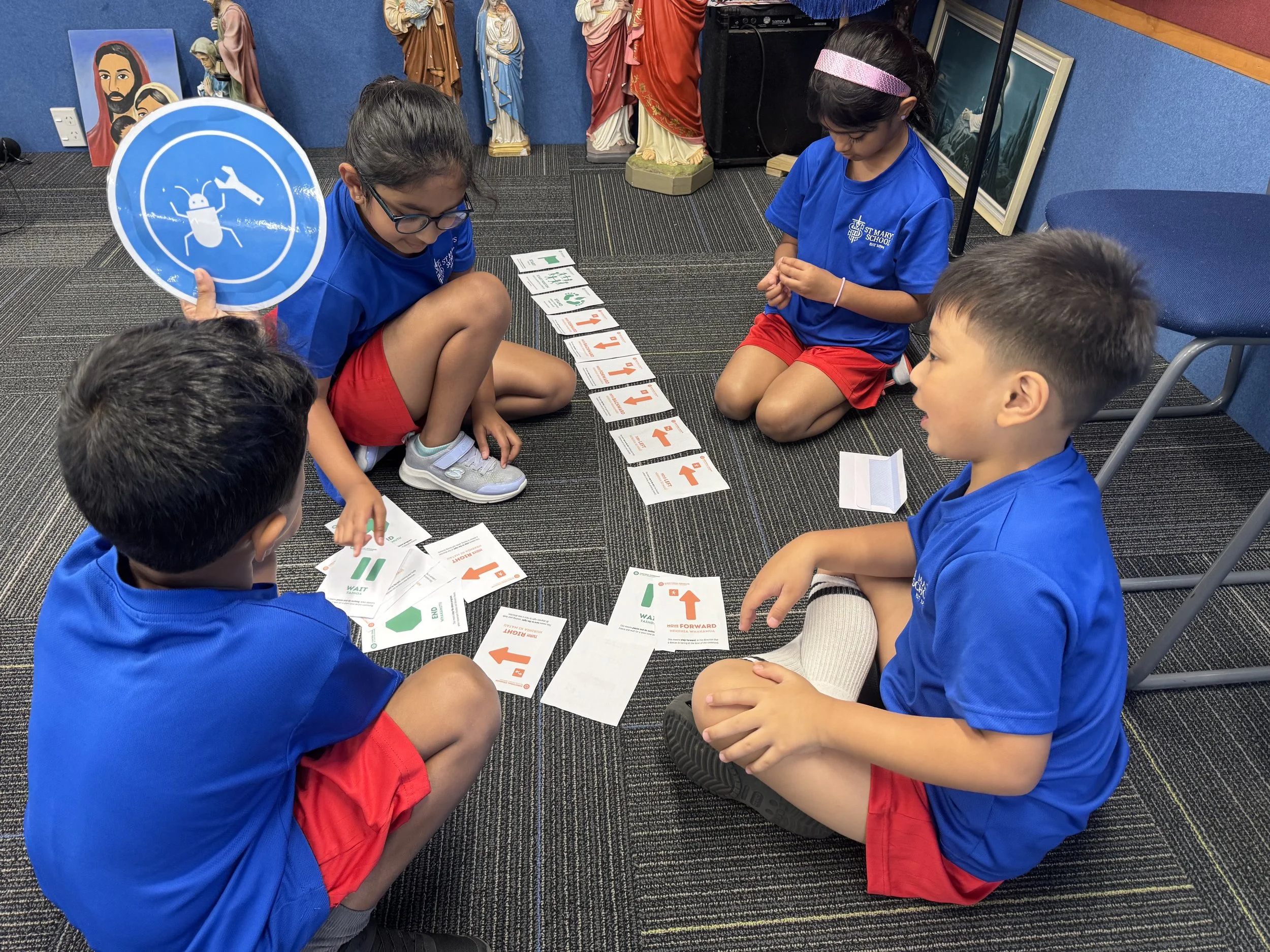
As you'd expect, things didn't always go smoothly. Ākonga bumped into each other. Commands didn't make sense. The wheels would fall off mid-dance…
Here was the opportunity to introduce one of the most important ideas in computer science: debugging.
A bug is simply a mistake in the instructions that stops a program from working the way it should. Debugging is the process of detecting the error and fixing it.
“Wait, that step happens too soon!”
“Ah! We need to turn before we move!”
“I think there’s a command missing!”
Teams then tested, analysed, and iterated their algorithms fixing errors in the code and making improvements or adjustments with each test run of the céilí.
One shared realisation landed particularly well: bugs aren't just problems, they're clues. They support us in problem-solving and point you toward the solution.
As ākonga iterated and debugged errors, the céilí started to flow more smoothly.
Patterns in Dance and Code
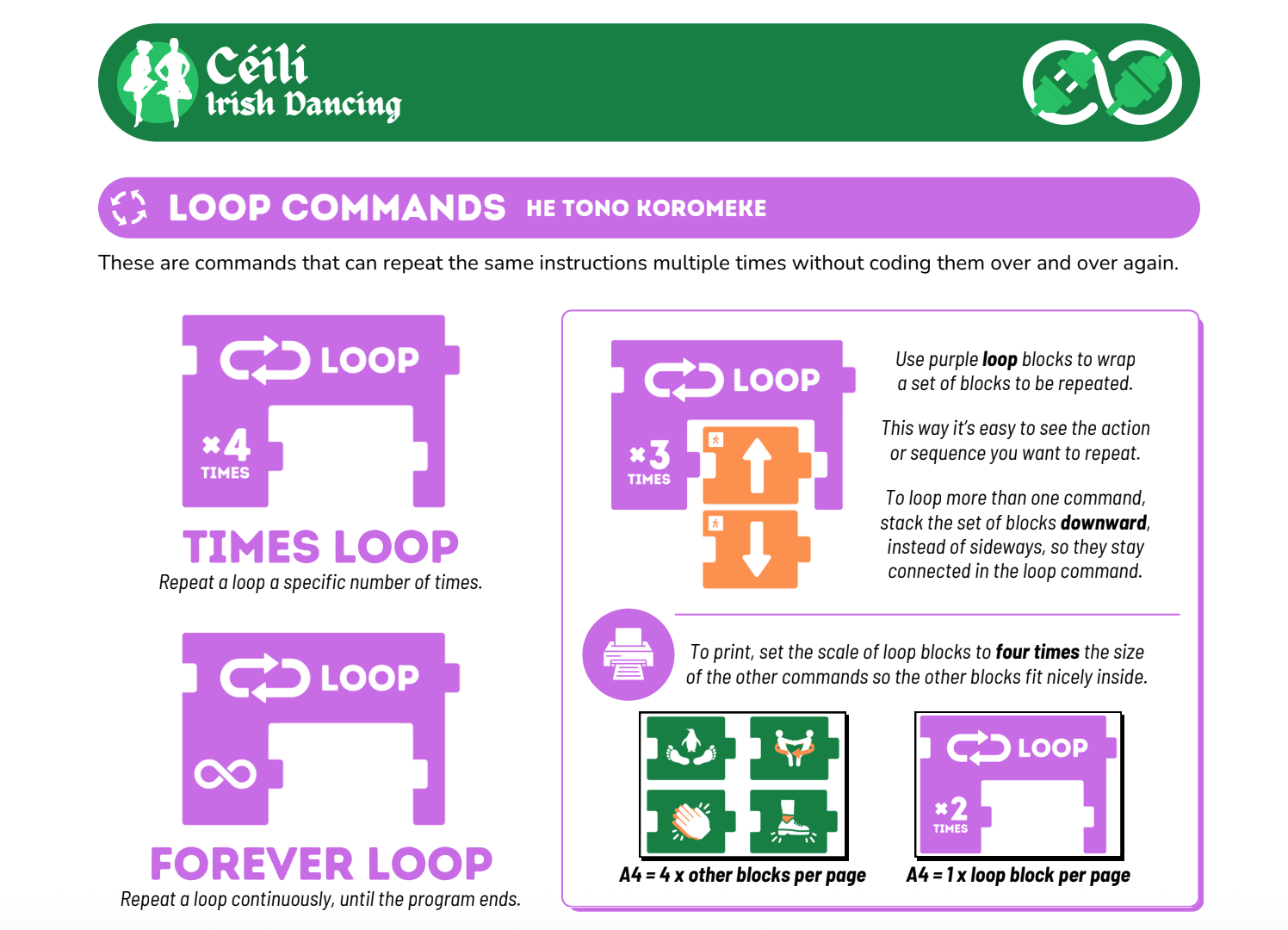
Céilí dancing is beautifully repetitive. Sequences recur as dancers move through the choreography. In computer science, this same idea has a name: a loop.
Rather than writing out the same instructions over and over, a loop allows you to define a sequence once and repeat it as many times as needed.
In the classroom, this concept arrived at exactly the right moment. The teams' algorithms were getting long, and strings of commands were starting to make both comprehension and testing more challenging. Introducing loops allowed the code to condense and the algorithms became shorter, clearer, and more manageable.
Move forward two steps…
Move backward two steps…
Repeat 4x…!
How You Can Harness Dance for Learning
If this has sparked your curiosity, the good news is that everything you need to give Céilí Unplugged a go in your own classroom is available in the Digital Pīkau.
We know kaiako are busy, so the goal was to make this resource as easy and accessible as possible to pick up and run with your learners. A full teacher guidance with implementation advice will be available to support you soon.
Inside the free resource kit you will find:
Printable Bonfire Céilí instructions with simple dance movements
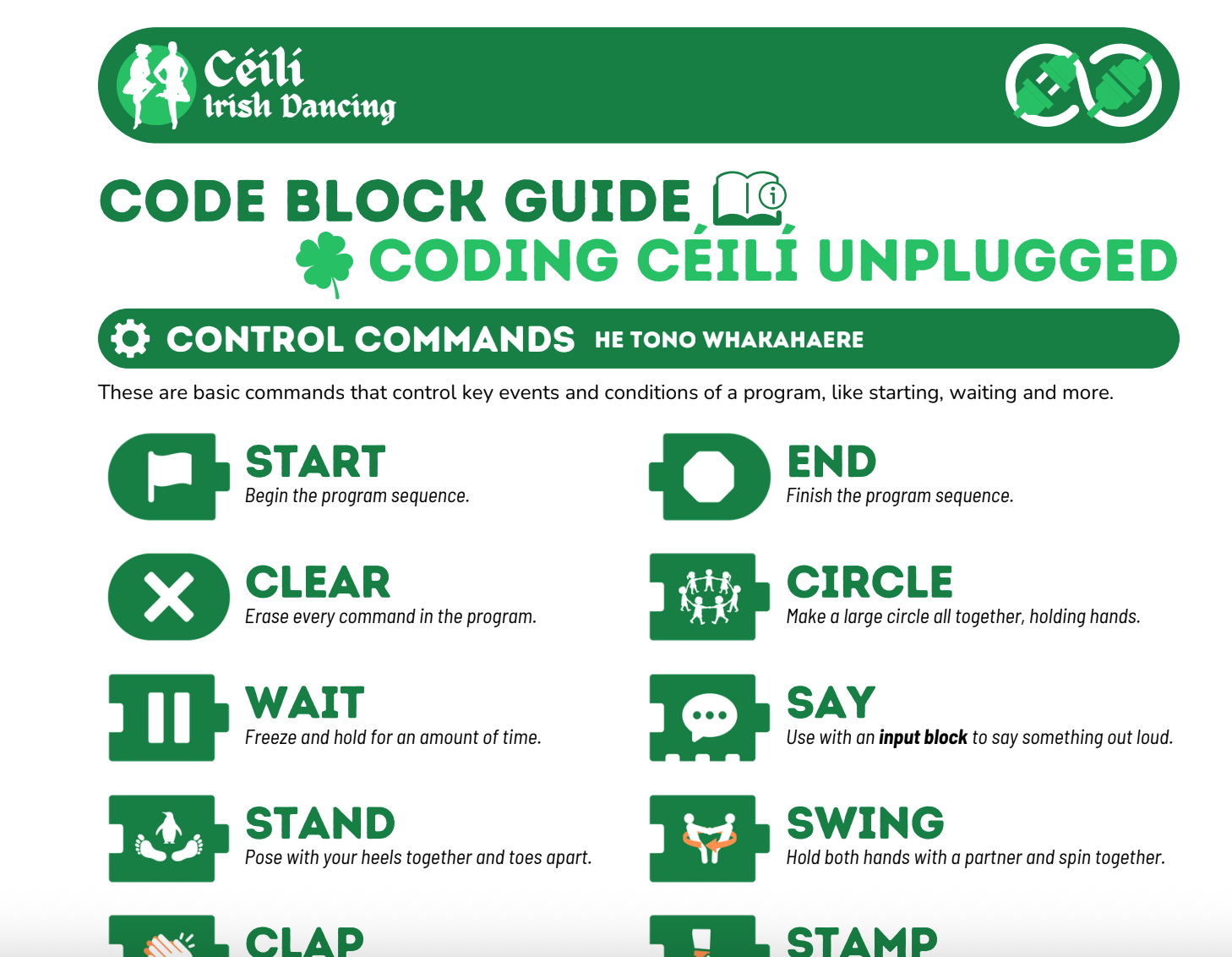
A code block guide to help unpack the meaning of each command
A set of printable code cards for learners to build their algorithms (Control Commands, Directional Commands, Loop Commands, Conditional Commands)
A short pilot highlight video from kura so you can see the learning (and fun!) in action
Whether you’re new to Computational Thinking or simply looking for fresh classroom ideas, this Pīkau resource is designed to be hands-on, flexible, and easy to adapt.
All you need is a bit of space, the Pīkau, and the music.
It’s the perfect winter or rainy-day activity to get everyone moving in the hall, burn off some energy, and connect movement with meaningful learning.