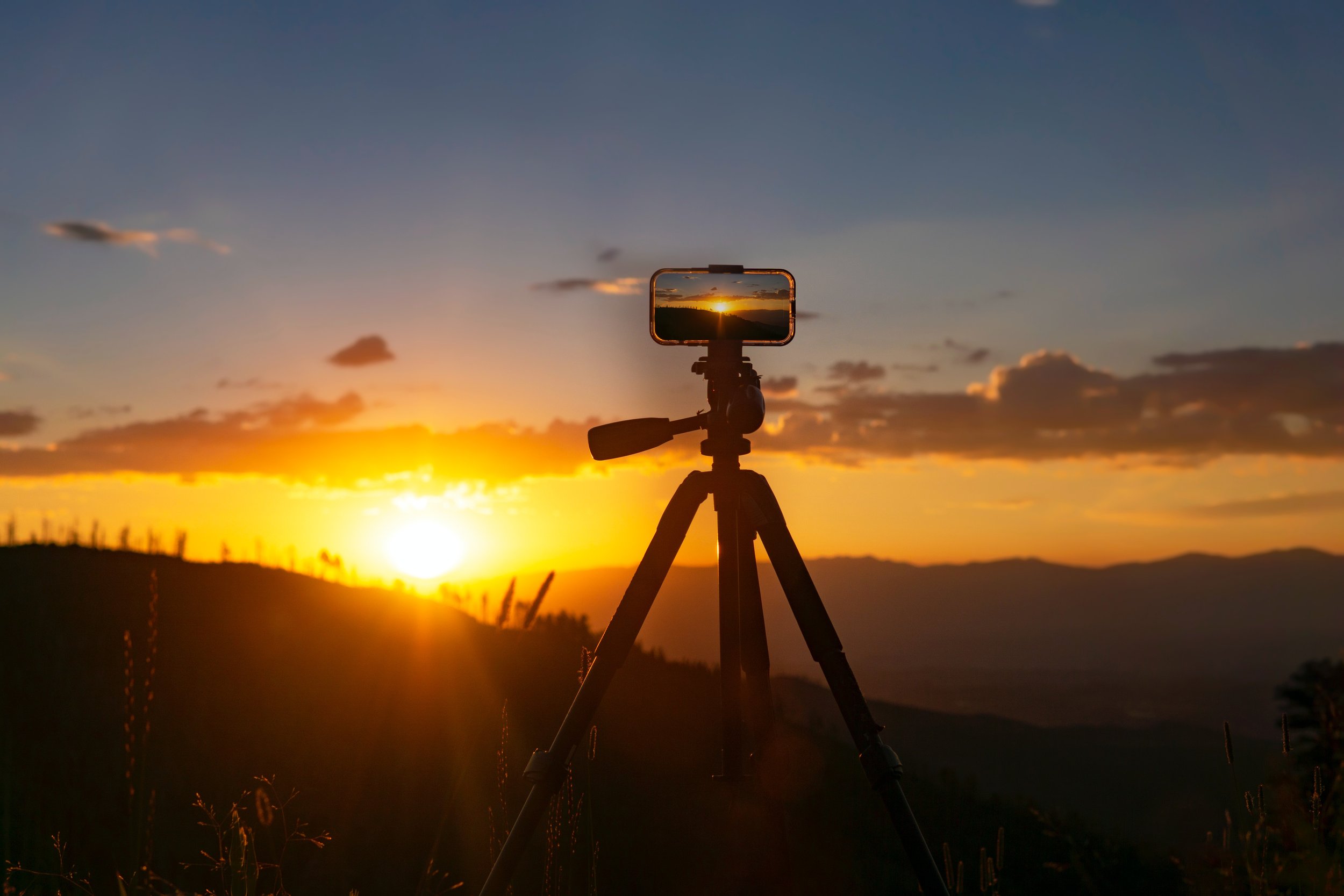
Capturing the Night Sky on Camera

Using a Smartphone, Tablet, or other Digital Camera
Platform
Digital camera, with access to settings
Digital Technologies Progress Outcomes
[CTDT] = PO1
Understanding that a digital camera is a system with inputs and outputs
Applying a simple algorithm with specific inputs to produces a specific output
Following a sequenced set of steps to achieve a digital outcome
Using a digital device purposefully to create a specific outcome
Making deliberate decisions about device settings to directly influence the result
Using online tools to research and apply information to appropriately configure a device
Evaluating digital outcomes and considering how to improve results
Cross-Curricular Links
Working with measurement and number data to solve a practical problem
Understanding light, exposure time, and Earth's rotation in the context of night sky observation
Social Sciences / Aotearoa NZ Histories
Supporting understanding and cultural significance of Matariki and Puanga
Photographic composition, developing and sharing creative outcomes
Year Levels
At each stage, with whānau permission & support for nighttime photography activity.
Y5–6 (Directed, with provided settings, focused on the device and photography)
Y7–8 (Guided, to research device specifications, apply calculations and setup)
Y9+ (Independent)
Duration
3 Parts (In-class and At-home)
Part 1 = In-class setup & understanding
Part 2 = At-home nighttime photography (with whānau permission & support)
Part 3 = In-class follow up, sharing & discussion
Resources
Differentiation
Focus on the Matariki cluster and Puanga of the Orion constellation, linking the activity with a celebration of the season and Māori new year.
Assign different stars, or constellations for learners to photograph, research, and report on with the stories across cultures.
Extension
Challenge ākonga to expand their photography to other aspects of nature and other times of day, experimenting with exposure time to investigate impacts on light and motion.
About Activity
This guide is designed to help learners make the most of the powerful digital cameras available on most devices these days, by introducing simple techniques for tweaking the camera settings to help capture their own stunning images of the night sky.
Learners will learn about the exposure time of taking photos before turning up towards the sky, to take their own quality photos of the stars. They will adjust their camera settings to suit their device, experiment with the stability of their camera and timing of their shot, and to share their astronomical results!
Activity Guide
Me pēhea e kitea ai a te kāhui o Matariki me te whetū ko Puanga:
How to find the Matariki cluster and the star Puanga: