
Why’s Tech So Important in Aotearoa?
We live in 100% Pure New Zealand, the land of sheep and cows, tourism hotspots and agricultural powerhouses. Our lamb graces menus globally, and our mountains feature in movies, postcards, and Windows default wallpapers.
In a country so reliant on sheep, cows, and spectacular landscapes, why are tech skills so crucial to a bright future? Why are there so many organisations making it their mahi to equip Kiwis of all ages and stages with digital know-how?
There are many reasons that technology is crucial to Aotearoa’s future.
Tech sector on the rise
Although not quite as dominant as agriculture, tech is already a major player in the economy. It’s also a growing one, with all metrics up over the past five years and more. The NZTech key metrics report from 2024 found that, despite a slight year-to-year decrease in the number of firms in the sector, software exports were up more than 20%.
In 2024, the tech sector:
Contributed $24 billion to the country’s GDP.
Employed 119,520 people.
Invested $1.2 billion into research and development.
Represented the third largest export in the country, after dairy and tourism.
Behind these high-level numbers is a ripple effect of impact. Each tech sector job creates other jobs in other sectors, and the tech that innovative New Zealanders develop supports other key industries: manufacturing, farming, banking, and beyond. The Bank of New Zealand was one of the first private-sector users of computers in the 1960s. Now, workers in almost any job (that they probably found and applied for online) will rely on software or applications on their pocket-sized computers.
Which brings us to the next point…
Tech is ubiquitous in work and life
It’s difficult to escape technology, even for those working in primary industries or trades. Health and safety compliance systems are managed by an app. Schedules are accessed via an online portal. AI is used in forestry to analyse aerial images for inventory management. Administration is managed digitally.
This reliance continues outside of work hours. Citizens interact with key government agencies such as the IRD through online portals - and while convenient for the majority, this excludes people without basic digital skills. Banking, job hunting, being notified of emergencies, even accessing medical support: all of this is much easier for those who are comfortable using the internet. In the modern age, being equipped with digital skills isn't just an advantage - it's becoming a baseline requirement for full participation in society.
Tech skills widen horizons — but only if we address who's being left out
The tech sector is a major and growing part of Aotearoa's economy, and it pays well. Radio NZ recently listed several tech-related sectors among those with mean salaries above $100,000, with computer systems design and related services recording a median income of $125,630.But here's the thing: the pipeline feeding that sector is leaking. There were only around 2,000 computer science graduates per year in New Zealand, compared to the estimated 4,500 needed to meet demand. (Digital Skills Forum, 2020.) A shortfall of over 10,000 skilled ICT workers was projected by 2025. And 81% of NZ tech companies believe the shortage of skilled workers is limiting their ability to grow, innovate, and compete internationally. (NZTech Survey, 2019.)The Ministry of Business, Innovation and Employment has flagged this pipeline as a priority because our current reliance on offshore recruiting and immigration to fill the gap simply isn't sustainable.
But this shortage isn't just a numbers problem. It's a diversity problem too.
The 2021 NZTech Diversity in Tech Report found that only 5% of the tech sector's workforce were Māori, 2% Pasifika, and women made up just 23% of roles. More recent research from Toi Mai (2024) shows these numbers have barely shifted. Māori still represent approximately only 5% of the tech workforce, Pasifika 4.4%, and women 29%. People with disabilities, those from low socio-economic backgrounds, and people from the LGBTQIA+ community remain significantly underrepresented across both reports.
More than three years apart, and the needle has barely moved. That tells us this isn't a problem that will solve itself.
A homogenous tech sector leaves enormous talent on the table. It also shapes technology that doesn't serve all of us equally. And geographically, opportunity remains concentrated: Auckland holds 52% of the tech workforce, with 14.1% in Wellington and 13.2% in Canterbury. That leaves a large portion of Aotearoa, including many rural and provincial communities, with far fewer pathways into the sector.
When we talk about widening horizons through tech, we have to be honest about who those horizons are currently open to and commit to changing that.
The automation risk: it's not just about opportunity
There's another dimension here that doesn't get enough airtime. Tech skills aren't only about accessing new opportunities: they're also about not being displaced by change.
Historically disadvantaged groups, including people in low socio-economic communities and many Māori and Pasifika whānau, are disproportionately represented in manual labour roles. These are often the jobs most at risk of being replaced or significantly reshaped by automation and AI. Upskilling these communities isn't just about opening doors to the future. It also ensures they aren't left behind as the world shifts beneath their feet.
The convergence of these facts: the size and trajectory of the tech sector, the salaries it offers, the shortage and lack of diversity, the way work and life are increasingly digitalised, and the very real risks of displacement, paints a clear picture. Digital skills present people with more choices, more protection, and more chances. Ensuring all groups can access that learning is central to breaking cycles of poverty and inequity in Aotearoa.
The education piece: what's happening, and what still needs to
The good news is that Aotearoa's school curriculum has begun to catch up. The Digital Technologies | Hangarau Matihiko learning area has been woven into the New Zealand Curriculum with two core strands: computational thinking and designing and developing digital outcomes. The ambition is clear: to move tamariki from passive consumers of technology to active designers and creators of it. The rise of BYOD (bring your own device) policies in schools over the last decade has also helped shift the culture around technology in the classroom.
But intention and reality don't always match, and the rollout has been uneven.
The challenges kaiako face are real: digital equity gaps mean some ākonga still arrive without devices or reliable internet access at home. The confidence to teach digital technologies doesn't come automatically, it takes time, professional development, and ongoing support that many schools, particularly those in high equity index (previously low-decile) or rural communities, simply don't have access to. Leadership and change management within schools play a huge role too. Where education policy, principals and school leaders champion a rich and innovative curriculum, kaiako thrive. Where they don't, the digital technologies strands can quietly fall to the bottom of the pile.
The risk is a growing disparity, not just in whether tamariki learn digital skills, but in the quality of that learning, depending on which school they happen to attend. A student in a well-resourced school with a confident, supported kaiako is getting a fundamentally different experience from one in an under-resourced school where the teacher is uncertain and the devices are outdated or nonexistent. Both are technically receiving the curriculum. The outcomes couldn't be more different.
What's needed is consistent, high-quality support for kaiako across the motu, not just in the first year of a new curriculum, but ongoing. And critically, every ākonga needs access to working technology hardware (including laptops, iPads and other digi-tech kit). Without this, the curriculum becomes purely theoretical.
Building the pipeline: where DFA and RAD come in
This is exactly the gap that Digital Future Aotearoa was built to address, and where our mahi connects the classroom to the career.
Think of it as a pipeline. Aotearoa needs more people in tech. We know the sector is underrepresented and underserved at the workforce level. But the pipeline runs all the way back to primary school, to whether a 9-year-old ever gets the chance to see themselves as someone who makes things with technology, rather than just uses it.
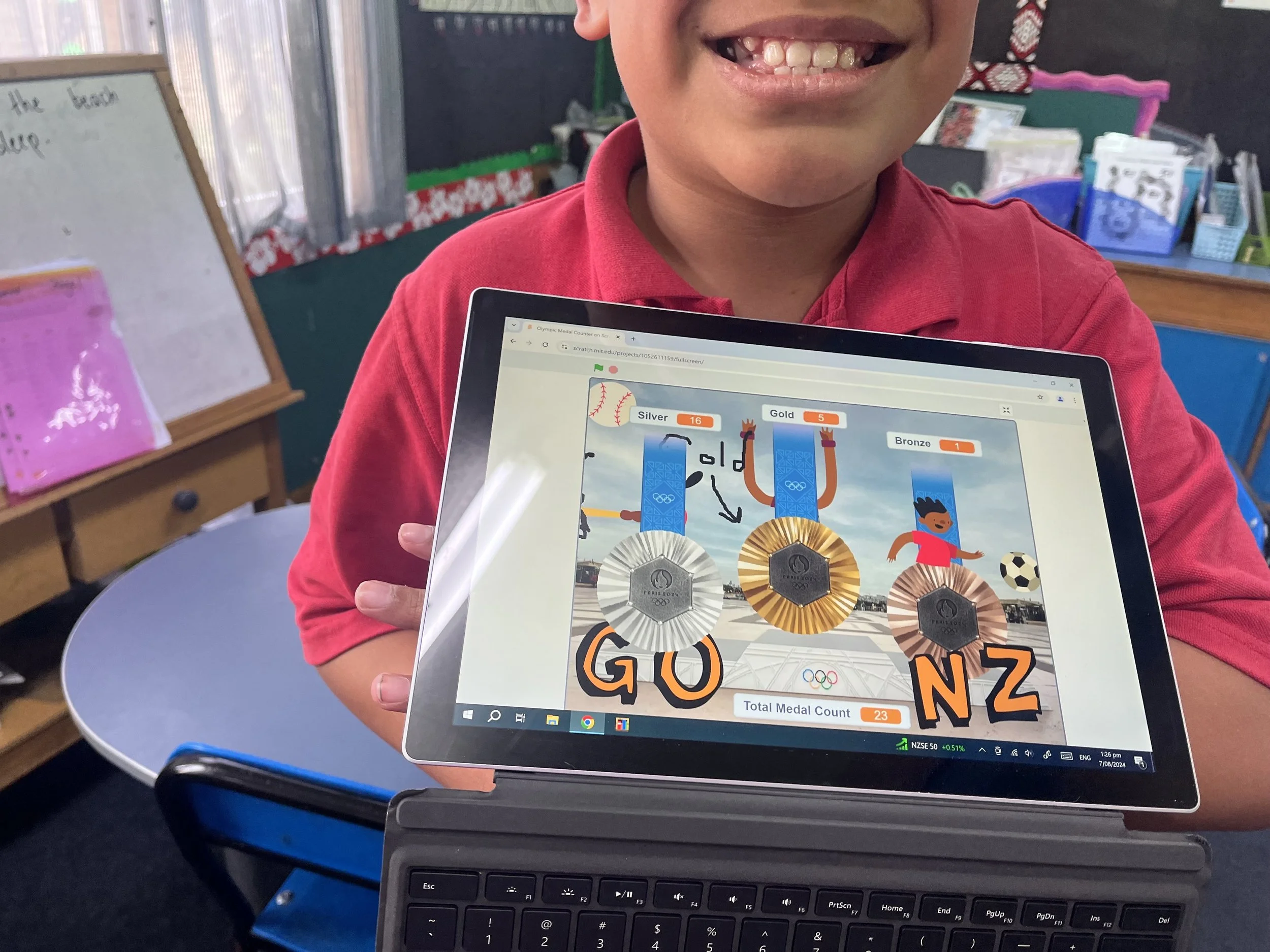
DFA works across several points in that pipeline. Through Ōtautahi Outreach, we place experienced facilitators directly into classrooms to co-teach digital technologies sessions alongside kaiako. Not after school, but during class time, where the learning happens. Kaiako in 2024 reported a 128% increase in their confidence to teach digital technologies independently after working with the programme. That's not just a win for one teacher, it's a multiplier effect for every ākonga in their class, this year and in years to come.
Digital Pīkau extends that reach nationwide with free, curriculum-aligned online resources that any kaiako across Aotearoa can access and use. Every resource has been developed and tested in real classrooms. No new budget needed. No expertise required to get started.
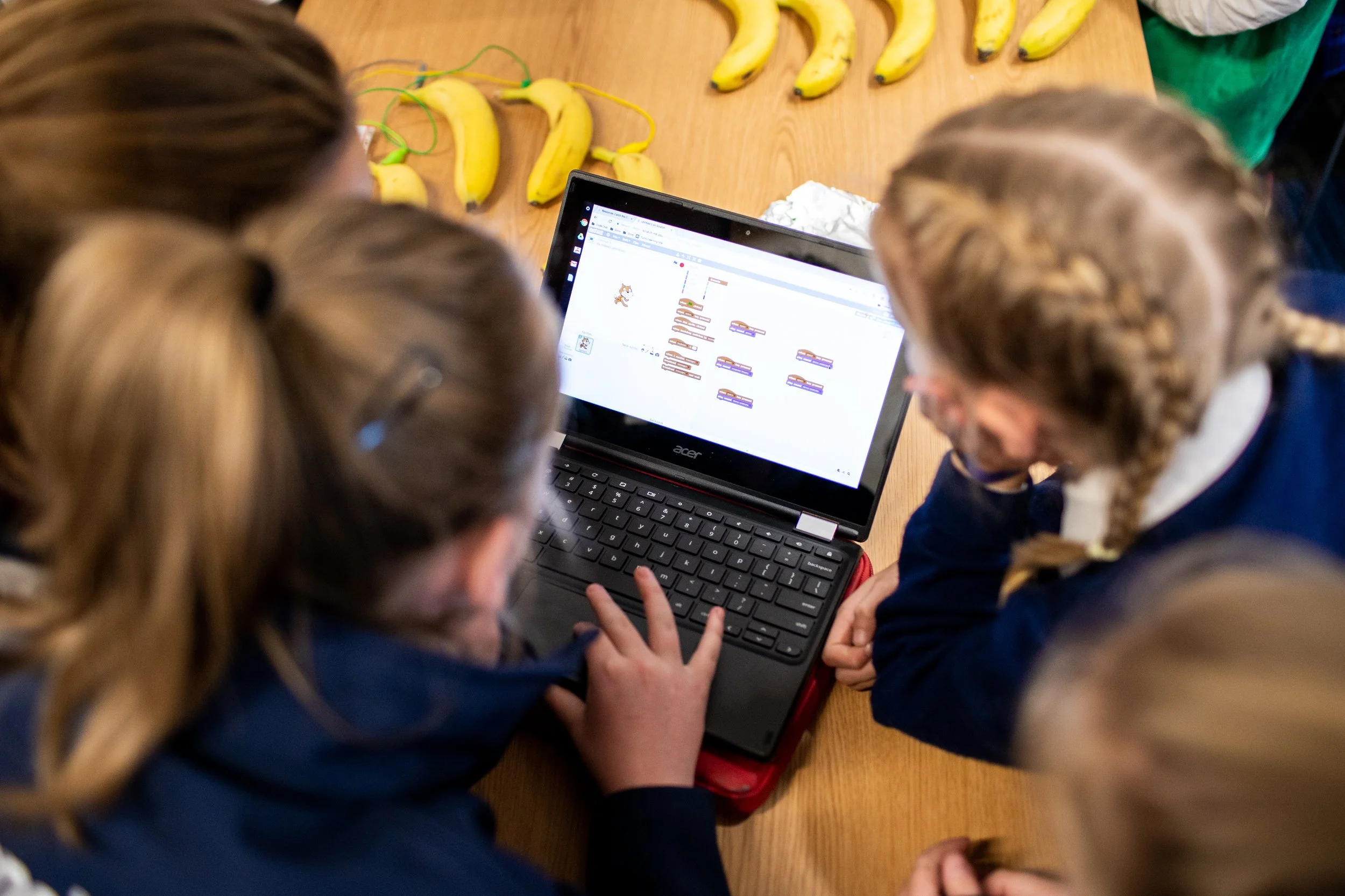
Code Club Aotearoa introduces tamariki aged 7–13 to coding, robotics, and computational thinking through free, volunteer-led clubs in schools, libraries, and community spaces. In 2025, there were 256 Code Clubs across Aotearoa, with 3,328 tamariki registered and 480 volunteers giving their time each week. For every $1 invested, Code Club generates $4.80 in social return.
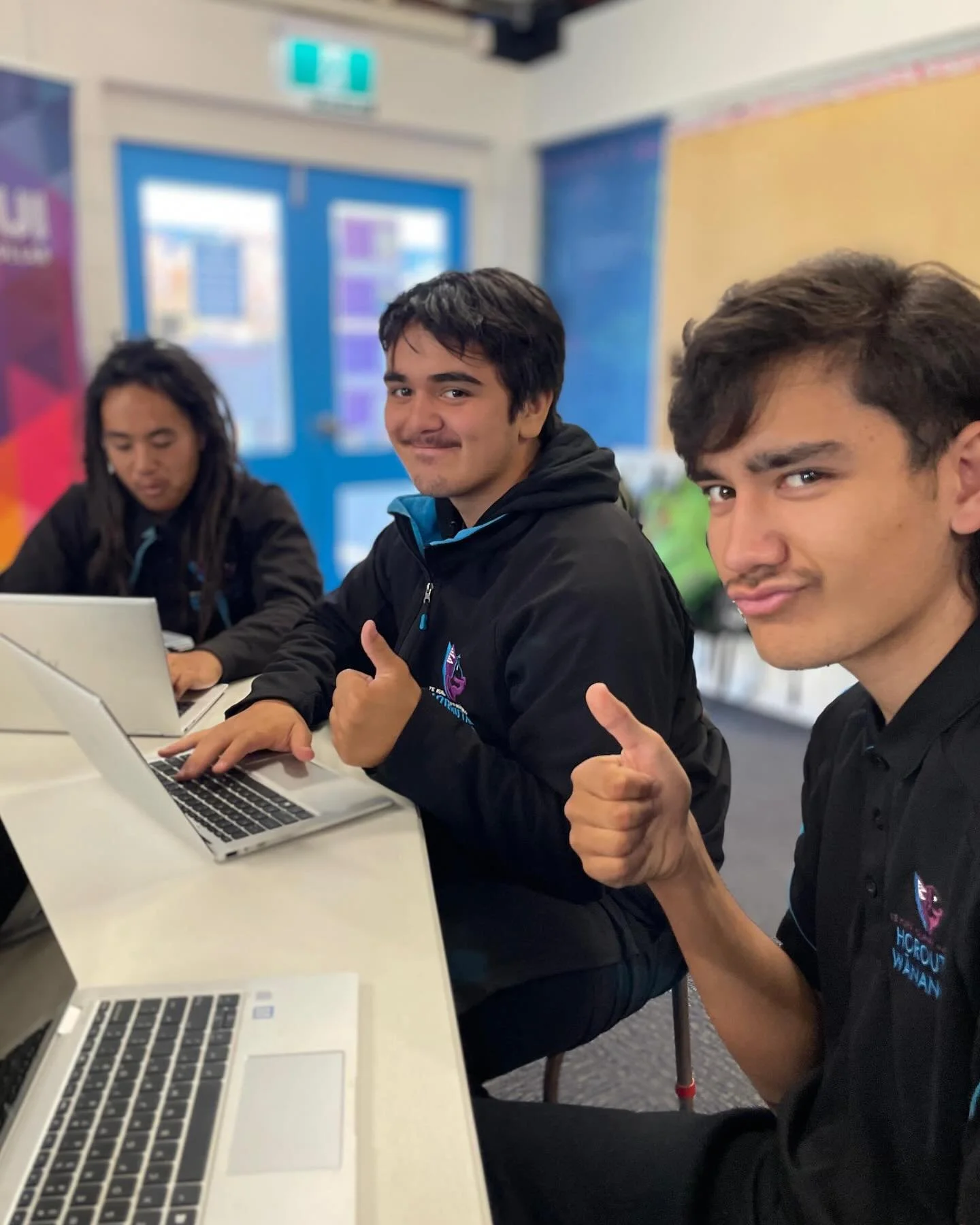
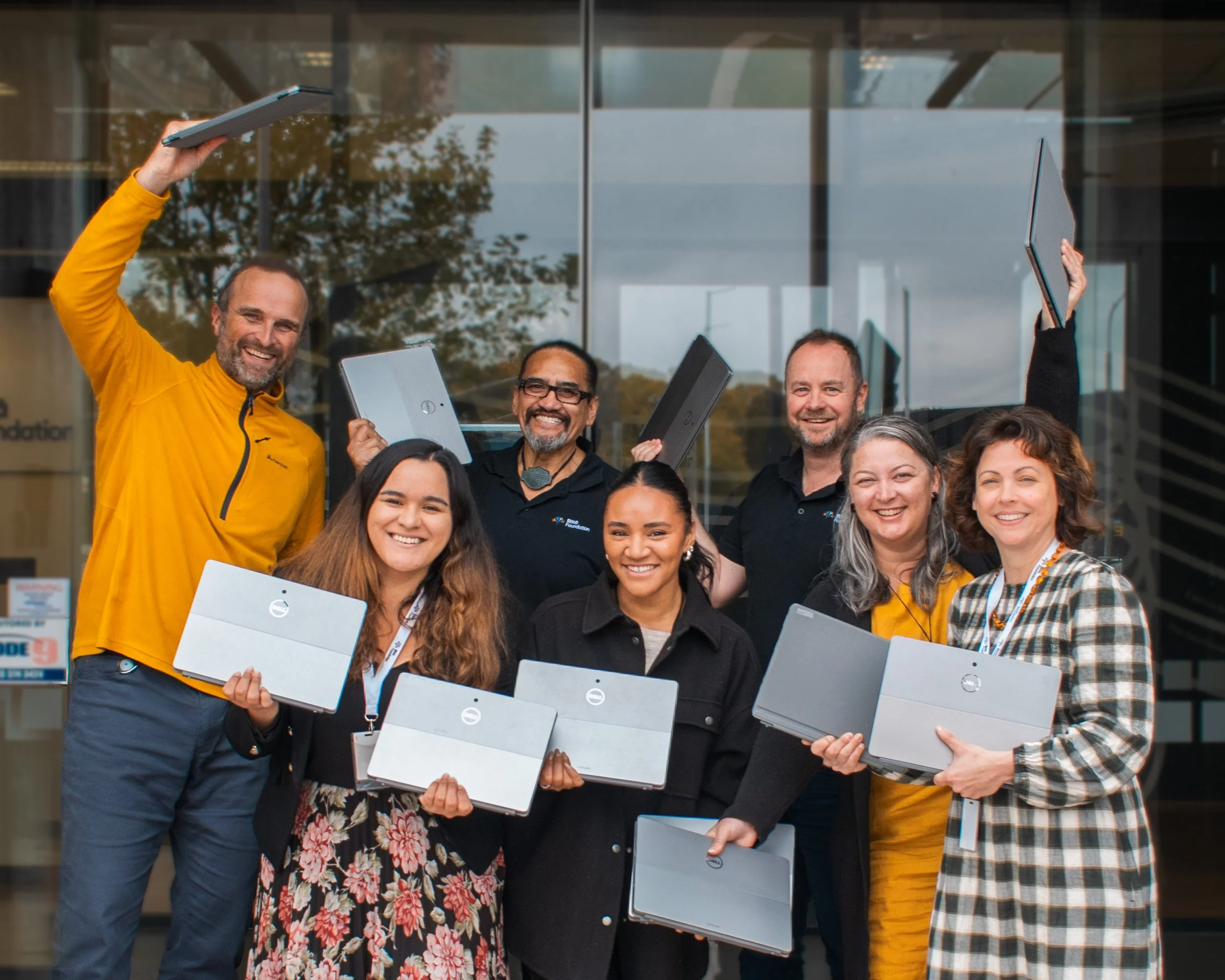
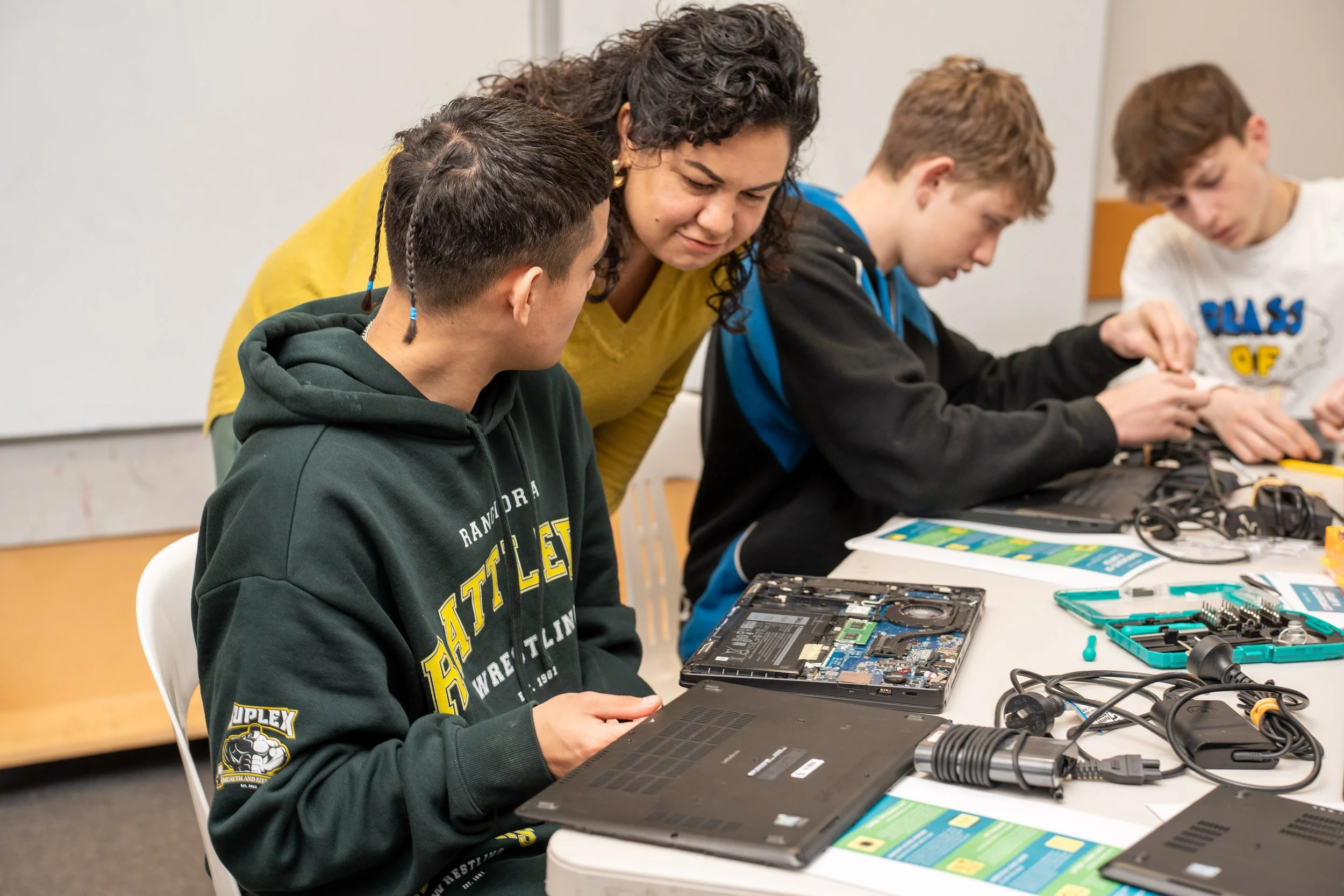
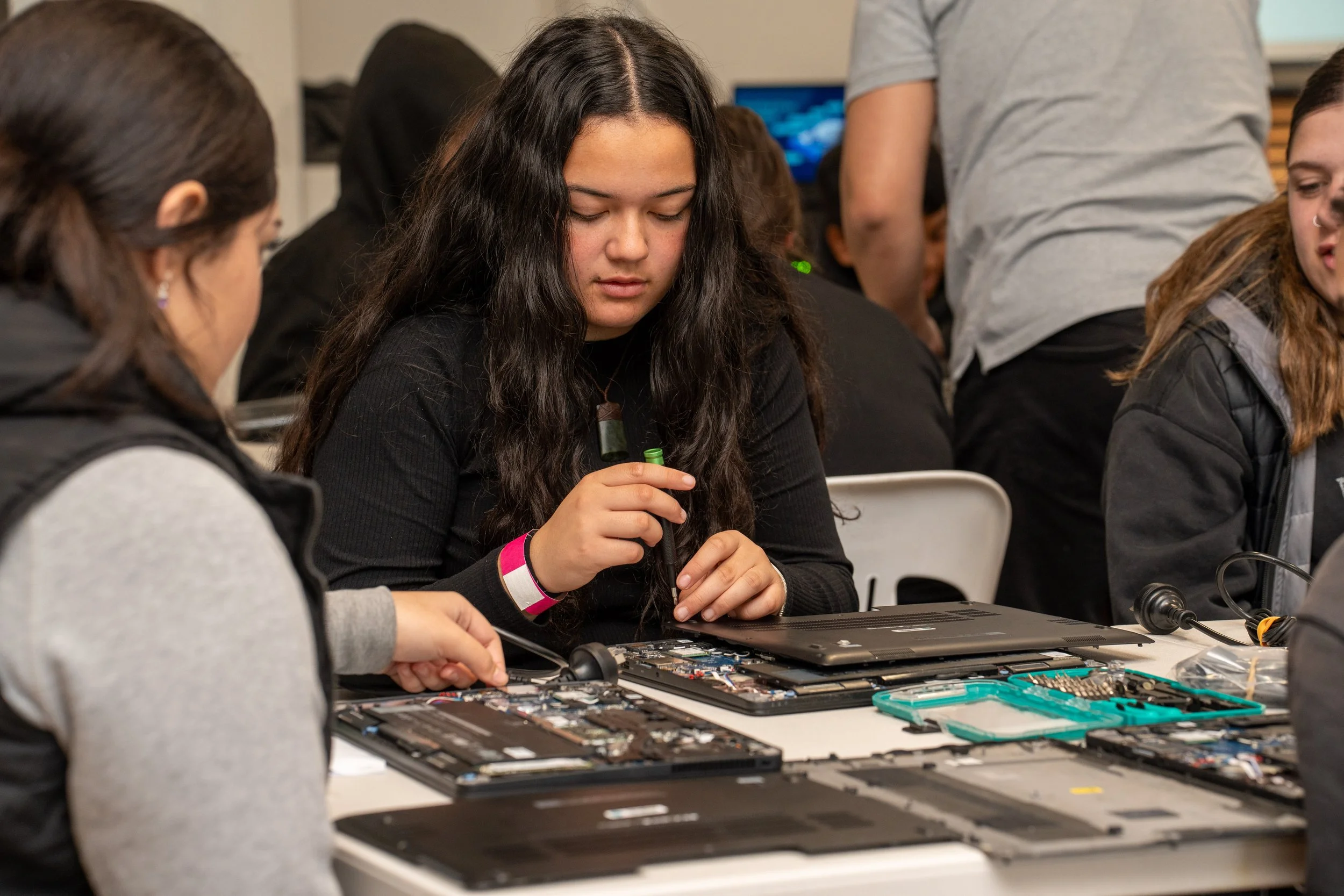
And then there's RAD; Recycle A Device. Because none of this works without a device in a tamaiti's hands. RAD refurbishes donated laptops and gets them into the hands of ākonga, whānau, and community members who need them. In 2025 alone, 2,585 laptops were gifted into communities across Aotearoa, with 4.2 tonnes of e-waste given new life in the process. Perhaps most tellingly, 42% of rangatahi who participated in RAD's refurbishment training said they were now considering a career in tech. Young people who, before RAD, may never have seen themselves in that sector at all.
That's the pipeline in action. Not a glossy brochure about what the tech sector could look like in 20 years. A rangatahi, a refurbished laptop, and a future that's just become a little more possible.
The way forward: bridging the digital divide
It always comes back to this! Tech skills are and will be important to New Zealanders, both for basic participation in society and for access to income-earning opportunities. However, some groups of people are disproportionately disadvantaged.
Data compiled by digital.govt.nz found that on average, only 91% of households in New Zealand have access to the internet. This already-low number reduces to:
69% for those in social housing
71% for people with disabilities
87% for Māori
89% for Pasifika peoples
There are also geographical barriers to internet access, with rural communities, who often require the internet for access to telehealth and other essential services, lacking quality connections. Ultra Fast Broadband, or fibre, reached 87% of New Zealand after a push in 2022, according to National Infrastructure Funding and Financing. It’s remote areas that miss out on quality connectivity, and alternative options such as Starlink can be prohibitively expensive.
Internet access, of course, is just one aspect of a barrier to digital inclusion. There are many, many more. The Kaunuku Framework speaks of the six iMASTS pillars (pou) of digital inclusion: Identity, Motivation, Access, Skills, Trust, and Safety. Each of these are a potential hurdle for New Zealanders that can keep them from the benefits of technology. Lack of devices, fears for safety and privacy, no opportunities to upskill, no motivation to seek out access or knowledge: all of these are holding people back.
There is content on all of these pillars to fill multiple blog posts. For now, the Aotearoa Internet Insights report 2025 found that only 72% of respondents were confident that they could get help for digital tasks if needed. That’s 28% of New Zealanders, more than a quarter, who do not have the tools or the support they are almost certain to need in our very digital modern world.
Where to from here?

Progress will be slow without government-level recognition of the importance of tech skills for everybody in Aotearoa. This must be reflected in education planning, in infrastructure, and in funding the organisations that are already addressing the digital divide.
If you’d like to contribute directly to Digital Future Aotearoa’s efforts in bridging the digital divide, find out more about what we do and how you can donate.
