
Every young person who comes to Code Club brings their own curiosity, ideas and pace. As volunteers and leaders, we don’t need to have all the answers. Our role is to help children make steady progress and feel good about what they achieve.
Goal setting is a simple way to do that. With Term 4 under way, it’s a good time to help club members choose a goal, work towards it and recognise it when they get there.
Below are some practical ways to bring goal setting into your club!
The importance of goals at Code Club
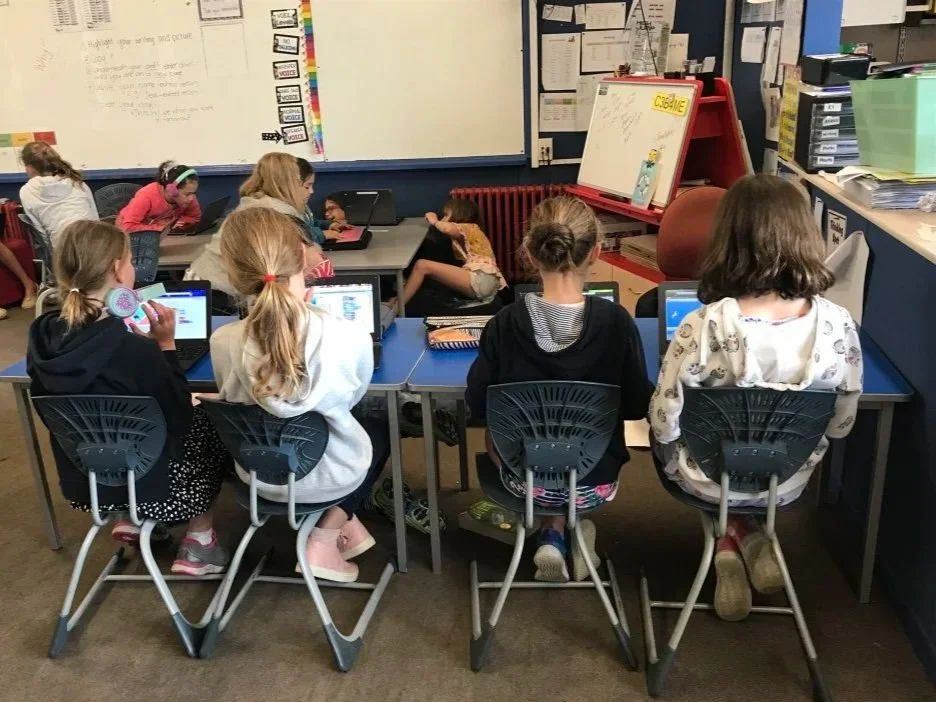
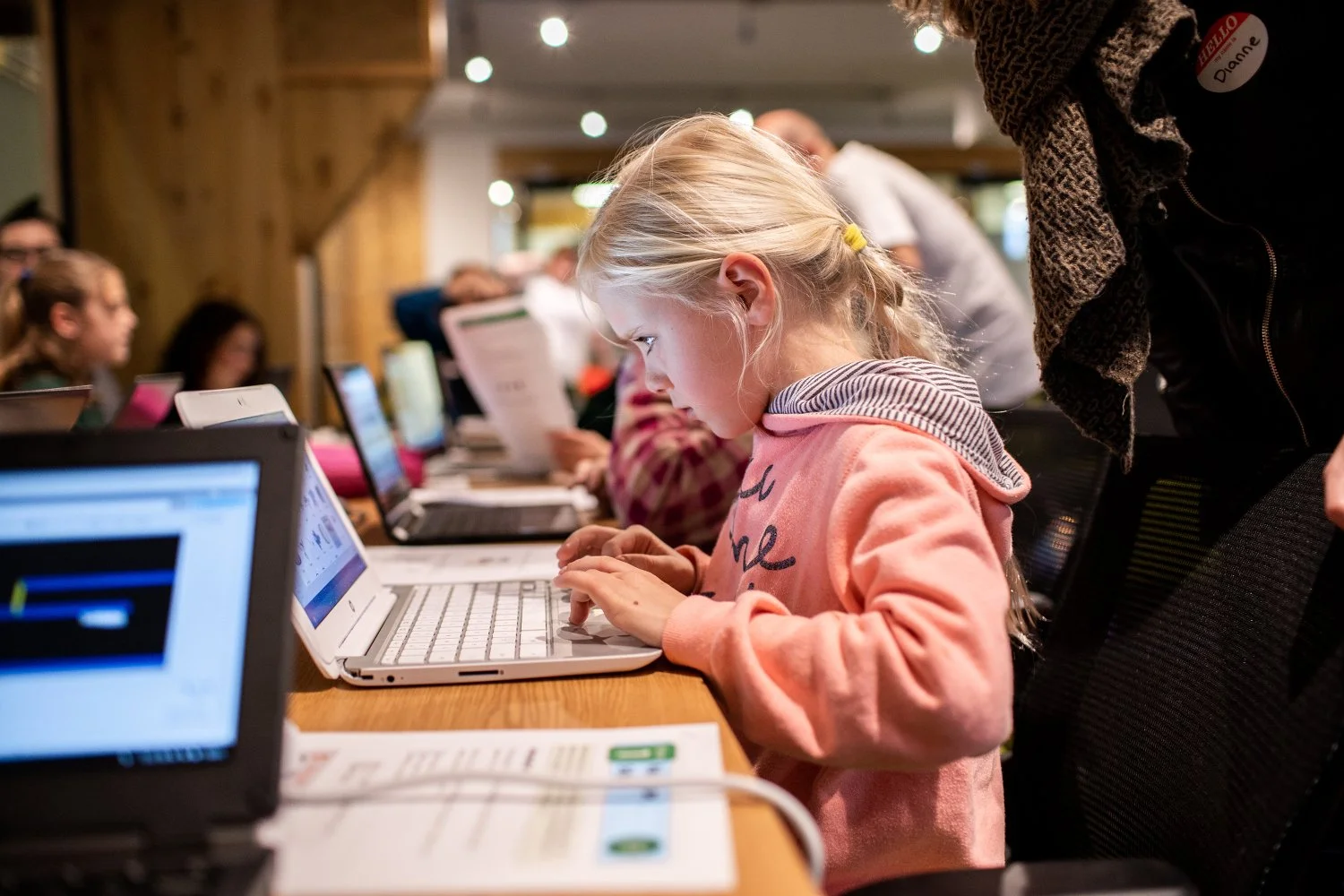
One of the best things about Code Club is that it is a space for tamariki to learn at their own pace. Some race ahead and others take their time, it doesn’t matter at Code Club, any pace is fine. But goals give each young coder something that belongs to them, they aren’t about being faster or better than anyone else, they’re about being a little further along than last week. When tamariki set their own goals, they are more engaged in the session, they build confidence each time they tick something off and they learn to persevere when the code doesn’t work the first time. There’s also less room for distractions and goals help them to focus on the task at hand.
And those skills go well beyond coding. Building these skills at code club sets tamariki up for success in other areas of their life such as school, sports and other hobbies. Goal setting also offers structure, allowing young people to focus and remain calm when things get overwhelming, a skill they’ll find is very useful later on in both their professional and personal lives!
Types of goals
Not every goal has to be about finishing a project as quickly as possible. Mixing it up helps tamariki find a goal that suits them:
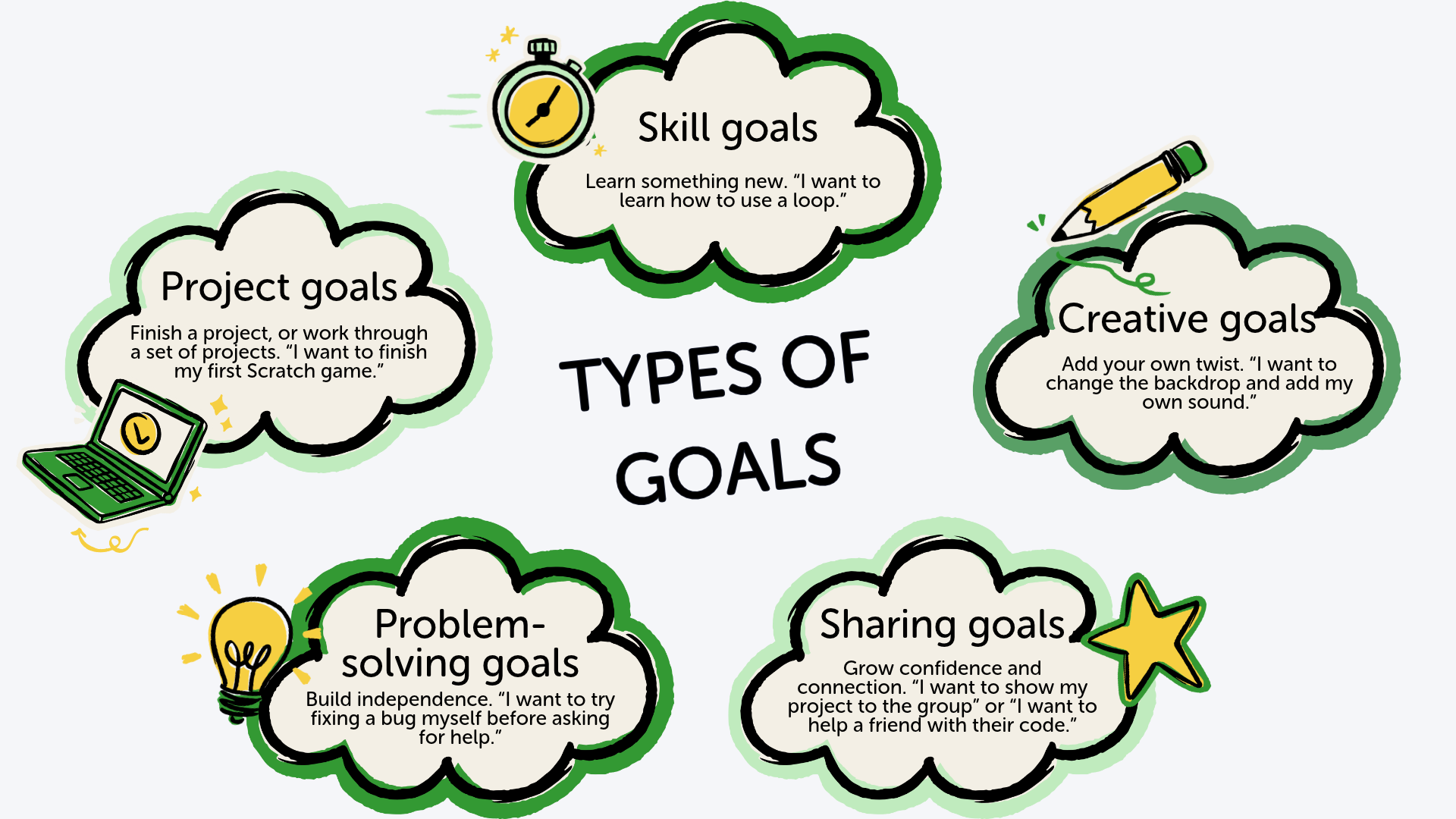
And remember to start small. The best goals for young coders are small, clear and doable. A goal like “become a game developer” is exciting, but it’s hard to know where to start. A goal like “make my sprite jump when I press the space bar”? That’s something a club member can work on today!
How to help tamariki achieve their goals
Setting a goal is the easy part. Here’s how to keep the momentum going:
Check in early and often. A quick “How’s your goal going?” at the start and end of each session keeps it front of mind.
Write it down. A sticky note, a goal card or a page in a club book makes the goal real. Keep it somewhere they can see it.
Celebrate the effort, not just the result. Fixing a tricky bug is progress, even if the project isn’t finished yet.
Break it into steps. Bigger goals become manageable when they’re split into chunks. Finish the character. Add movement. Add a score.
Be flexible. If a goal turns out to be too big, help them shrink it. If it was too easy, help them stretch it. Changing a goal isn’t failing.
Lean on the group. Pair tamariki up, encourage them to share ideas, and let them cheer each other on.
The Raspberry Pi Foundation’s Code Club project paths are a great place to look for goal ideas. Paths like Introduction to Scratch, More Scratch and Further Scratch give tamariki a clear next step, with options for Python, web and more when they’re ready.
Over to you!
This term, try setting one small goal with each of your club members. You might be surprised how much it lifts the energy in the room. Code Club also has free, printable certificates and progress maps for completing project paths, sharing a project, problem-solving and more. They’re a simple way to recognise progress, and tamariki love taking them home to show their whānau!
Term 4 is also great time to look back together. Ask your club: What goal are you proudest of this year? What did you learn along the way? What do you want to try next year?
Not part of Code Club yet? We’re always looking for volunteers and clubs in schools, kura and libraries across the motu. You don’t need to be a coding expert. Just bring your enthusiasm, and we’ll support you with the rest!